


































Just a few weeks ago, on April 1, NASA’s Artemis II made history as the first mission to carry astronauts to the Moon since 1972. After a ten-day journey traveling over 250,000 miles from Earth, the Orion spacecraft safely returned the crew to Earth, splashing down in the Pacific Ocean at 5:07 p.m on April 10. This mission was an important step toward NASA’s goal of landing humans on the Moon and eventually Mars. For many people, the Artemis II mission to the Moon represents a powerful return to deep space after the conclusion of the Apollo program.
The crew consisted of four skilled astronauts, each with an important role on board the ship: Commander Reid Wiseman, who led the mission and ensured all operations ran smoothly. Pilot Victor Glover, who was responsible for navigating the Orion spacecraft, especially during critical moments like ascent and reentry; Mission Specialist and only female on board Christina Koch, who conducted experiments and managed major systems; and Canadian Mission Specialist Jeremy Hansen, who was in charge of life support and emergency equipment. Together, the four astronauts gathered data, conducted experiments, and gave tens of interviews as they became the first humans in over 50 years to travel beyond the lower orbit of the Earth and towards the Moon.
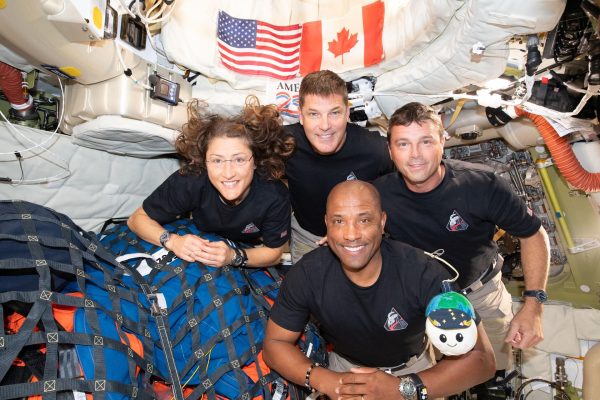
One especially important crew member that the media loved and supported was Artemis II’s very own zero-gravity indicator, a small plush mascot named “Rise.” Floating freely inside the spacecraft during interviews, it showed that the crew had reached weightlessness. The name “Rise” was inspired by the famous “Earthrise” photo taken by Bill Anders of the Apollo 8 Mission. The plush has become beloved by the internet, with major news outlets and social media platforms featuring “Rise” in their stories.

The importance of Artemis II goes beyond just reaching the Moon; the crew of the mission broke huge social and cultural barriers. Reid Wiseman, a single father, represented a new balance between family and career. Victor Glover made history as the first Black man to travel around the Moon, marking a major step toward representation for people of color in space. Christina Koch became the first ever woman to make the journey to the Moon.
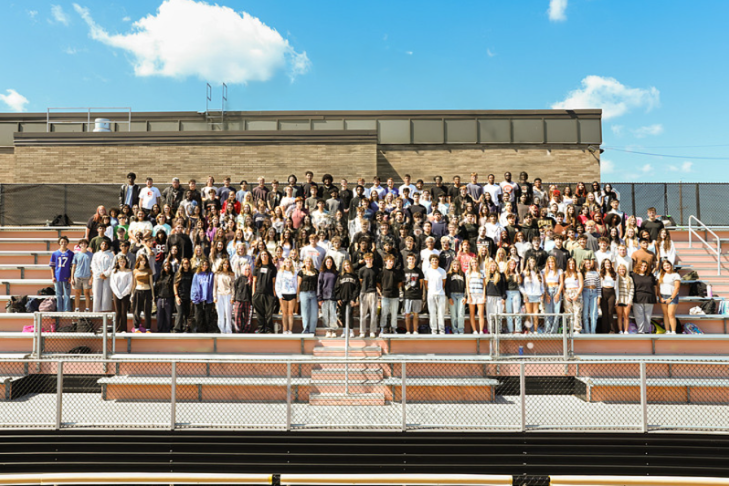
A sophomore at Somerville High School stated, “Christina Koch is for every little girl who dreams about doing something big in a world so small, where women are constantly put down.”
Another sophomore student added, “For years, women have been cast to the side and men have been the people sent to the Moon, but the inclusion of Christina Koch shows that barriers are being broken for women in the aerospace industry.”
That leaves Jeremy Hansen, the first Canadian and Non-American to venture to the Moon. All four members of the crew are highly educated and trained members who show that barriers can be overcome and that training, along with hard work, can only lead to success.
The importance of Artemis II, besides its outstanding crew, lies in testing main systems like life support and re-entry to prepare for future missions to the Moon and Mars. In recent panels after returning, the astronauts reflected on their time together and in space.
Commander Reid Wiseman stated, “It’s a special thing to be human, and it’s a special thing to be on planet Earth,” paying tribute to everyone’s earthly heritage.
Astronaut Christina Koch elaborated on what it meant to be a crew: “A crew is people…with the same purpose…willing to sacrifice silently for each other…Planet Earth, you are a crew,” she stated.
Their conference about the mission highlighted what it means to be human and the importance of having emotion, because that is what defines all of us as a race, it is what defines us as humanity.